Yes, a person living with dementia can be cared for safely and well at home in Kota Kinabalu, and for most families it is the kindest choice. Familiar rooms, a steady routine and known faces ease the confusion that a strange place brings on. The real question is rarely whether home care is possible. It is how to set it up so your parent stays safe and the family does not run itself into the ground.
Dementia is more than forgetfulness
It helps to see dementia as a medical condition, not “just old age”. Alongside memory, it gradually affects judgement, mood, sleep, appetite, communication and the ability to manage medicines. Tasks that were once automatic become hard. Behaviour can change too: restlessness, wandering, or resisting help that is clearly needed. Naming what is happening is the first step to managing it calmly.
Why home is often the right place
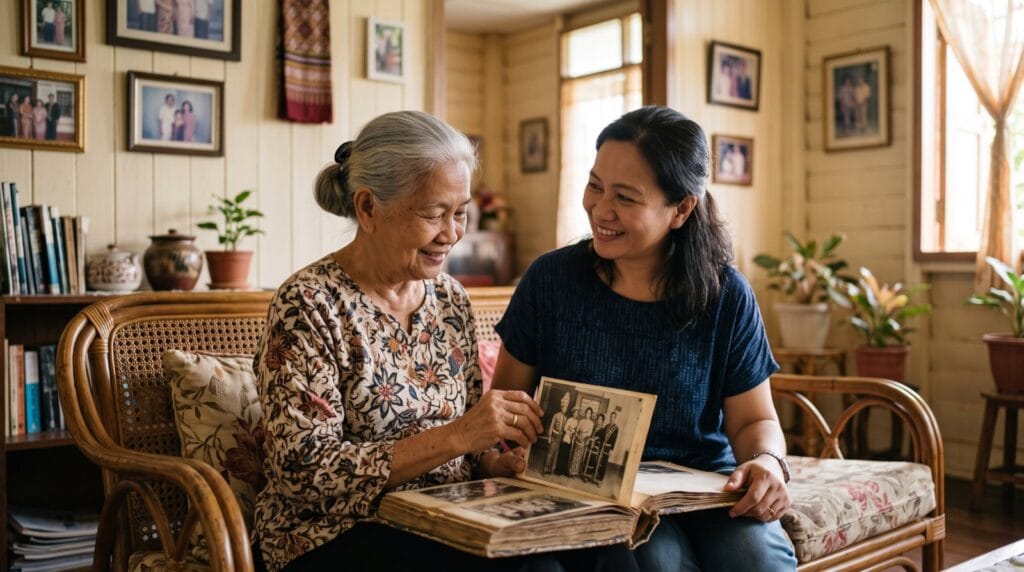
Familiarity is genuinely therapeutic in dementia. A crowded clinic or a hospital ward is disorienting, and the distress it causes can set a person back for days. Home keeps the routine intact, the surroundings recognisable, and the care in the hands of a small, consistent team your parent can learn to trust.
What good dementia care at home looks like
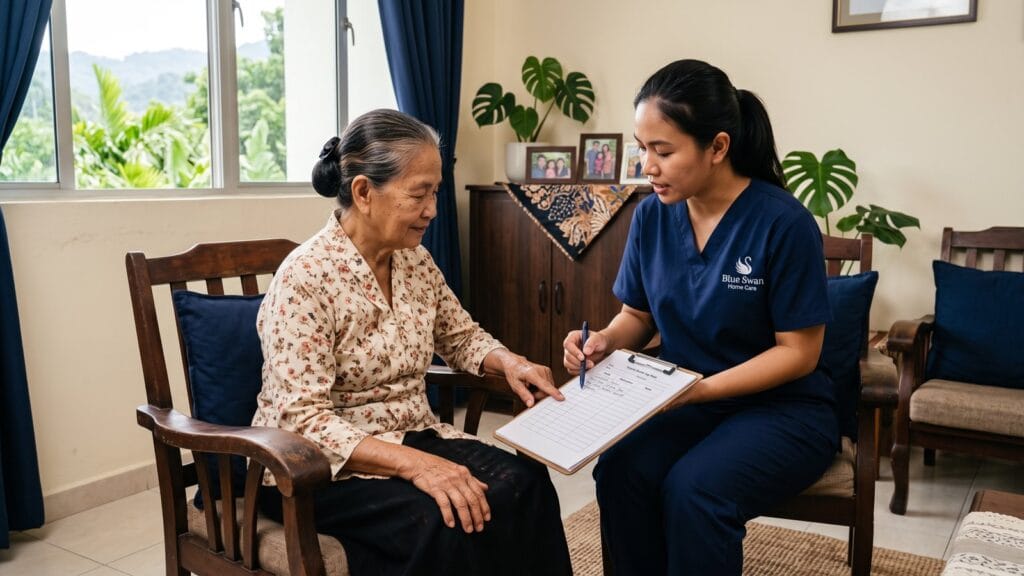
Sound care starts with a proper assessment: medical history, a full medication review, home safety, mood, and an honest look at how the main carer is coping. From there comes a written plan that everyone follows and that changes as needs change. At Blue Swan, care follows a clinical framework designed by Dr Gordon Pang, whose particular focus is dementia; when a case needs a specialist decision it goes to him or your parent’s own specialist, while the day-to-day visits are carried out by nurses and carers who come to know the family well.
A medication review matters more than families expect. Some medicines worsen confusion, and an older person with dementia is often taking several. Reviewing them, in coordination with the prescribing doctors, can lift the fog more than any new prescription.
Keeping your parent safe at home
A few practical measures prevent most crises:
- Reduce fall and wandering risks around the house.
- Simplify cluttered spaces and keep everyday items where they are expected.
- Manage medicines with a dosette box and supervised doses.
- Keep food and fluids up, because dehydration alone can deepen confusion.
- Watch for infection. A urinary infection can trigger a sudden, frightening change in someone with dementia, and it is very treatable once spotted.
A visiting nurse or doctor catches these early, before they become an emergency.
Looking after the carer, too
Caring for someone with dementia is constant, and exhaustion is not a failure. Sleep is broken, patience is tested, and the person you are caring for may not remember the help you gave an hour ago. Shared tasks, planned respite and a professional team you can call take the weight off the family carer and protect your parent at the same time.
When to bring medical help to the house
Call for a home visit if there is a sudden jump in confusion, new agitation, a fall, a refusal to eat or drink, or any sign of infection. A doctor or nurse can assess your parent in their own room, adjust the plan, and spare everyone a distressing trip to hospital where one can be avoided, while knowing when hospital is genuinely the safer option.
Common questions
Can dementia be cared for at home in Kota Kinabalu?
Yes. Assessment, day-to-day management and family guidance can all be provided at home, with a geriatrician’s framework behind it. You can read more about our geriatric care at home.
What is the difference between normal forgetfulness and dementia?
Forgetting a name and recalling it later is common with age. Dementia affects daily function: managing money, medicines, cooking, or finding the way home. If daily life is slipping, it is worth a proper assessment.
My parent became confused very suddenly. Is the dementia getting worse?
A sudden change is often something treatable rather than the dementia itself, commonly an infection or a medication problem. It is worth a prompt review at home, and our doctor home visits are set up for exactly this.
I live overseas. Can you manage my parent’s dementia care in KK?
Yes. Many of the families we help have adult children abroad. We coordinate the care and keep you updated, so you stay part of the decisions from a distance. Get in touch to talk it through.
If you are caring for a parent with dementia in Kota Kinabalu, a complimentary care planning discussion can help you map out calm, safe care at home. Book a complimentary care planning discussion, or read more about our geriatric and frailty care.